Ask ten people how often a bedsheet should be changed and you will get ten answers, from "every Sunday" to "when it looks dirty". The guidance from doctors and sleep researchers is fairly consistent — every one to two weeks, and weekly if anything makes your bed dirtier than average.
That advice is written for mild climates. In Lahore in June, or Karachi in the humidity, a sheet collects in three days what a European bed collects in two weeks. Here is a schedule that reflects where we actually live.
The short answer
| Item | Summer | Winter |
|---|---|---|
| Bedsheet | Every 4–7 days | Every 7–14 days |
| Pillow covers | Every 3–4 days | Every 5–7 days |
| Mattress protector | Monthly | Monthly |
| Quilt or comforter cover | Every 2–3 weeks | Every 3–4 weeks |
| Comforter or razai itself | Once or twice a season | |
| Pillows (replaced, not washed) | Every 1–2 years | |
Why pillow covers need changing most often
This is the item almost everyone leaves too long. Your face is against it for eight hours, and it collects oil from skin and hair, sweat, and whatever you put on your face before bed. Most dermatologists suggest every three to four days, and people with acne often notice the difference within a fortnight of doing it.
It is also the easiest change to make, because pillow covers are small and dry in an hour. If you only improve one habit from this article, make it this one.
Change sooner if any of these apply
- You sweat at night, which in a Pakistani summer without AC is most people.
- Someone has been ill. Strip the bed the day the fever breaks.
- Allergies or asthma in the house. Weekly, no exceptions — our dust allergy guide explains why bedding is the main source.
- A pet sleeps on the bed. Twice a week is not excessive.
- You eat on the bed, which more of us do than will admit it.
- Smog season. Fine particles settle on the bed all day from late October onwards — see our smog season guide.
What actually happens if you leave it a month
Nothing dramatic, and nobody should feel guilty about a busy fortnight. But three things build up steadily:
- Skin and oil. You shed skin all night, and it feeds dust mites, whose waste is the usual trigger for the morning sneezing.
- Moisture. A body loses a surprising amount of water overnight, and in humid cities that moisture lingers in the fabric.
- Smell you have stopped noticing. The clearest evidence is how obvious a fresh sheet feels when you finally change it.
The real obstacle is owning only one set
Most people who change their sheets fortnightly are not lazy. They have one set per bed, so changing it means washing, drying and remaking the same day — and if it rains, or the washing does not dry in December fog, the bed stays stripped.
Two sets per bed solves the whole problem. One is on the bed, one is clean in the cupboard, and the change takes four minutes with no laundry pressure attached. Three sets is comfortable in winter, when drying takes longer. More than that and they start yellowing in storage, which our bedding storage guide covers.
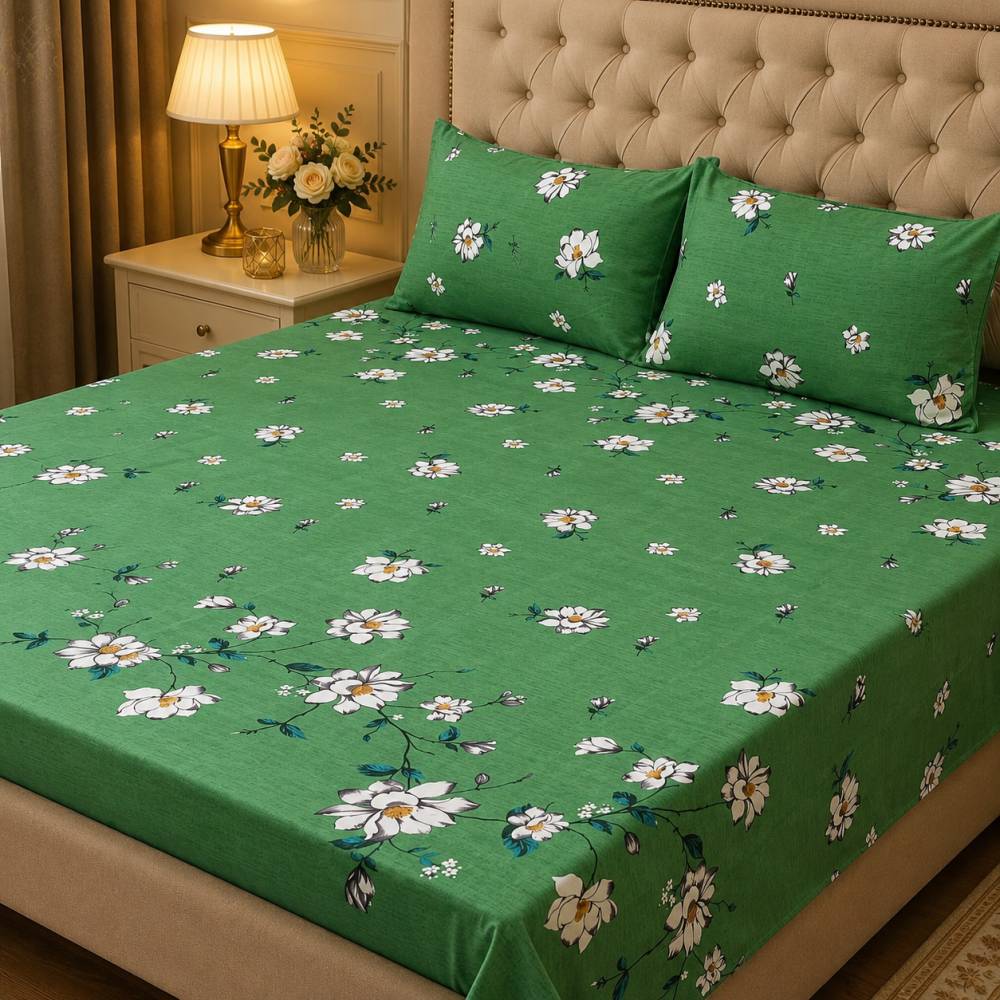
Our crystal cotton king sets are Rs 2,399 for a 3 piece set with two pillow covers, free delivery and cash on delivery anywhere in Pakistan.
Make the change easier
- Pick a fixed day. Friday or Sunday morning — a habit beats a decision every week.
- Change pillow covers midweek, separately from the sheet. Two minutes, and it is the highest-value part.
- Keep the spare set folded inside its own pillow cover, so the whole set comes out of the cupboard as one parcel.
- Do not shake the old sheet out in the room — fold it in on itself and carry it out, or you throw the dust straight back onto the bed.
- Wash cold with less detergent and dry in shade for printed sheets, as our washing guide explains.
What about the mattress underneath?
Changing sheets does nothing for the mattress, which collects sweat for years and cannot be washed. A protector takes that instead and goes in the machine monthly. Our mattress protectors start at Rs 2,300, and how to make a mattress last longer covers the rest — rotating, airing and dealing with spills.
Frequently asked questions
How often should bed sheets be washed?
Every one to two weeks as a baseline, and every four to seven days in a Pakistani summer or if you sweat at night. Weekly is the right default for most homes here.
How often should pillow covers be changed?
Every three to four days. They collect facial oil and hair product, and they are the item most people leave far too long.
Is it bad to sleep on sheets for a month?
Not dangerous, but skin cells, oil and moisture build up and feed dust mites, which is a common cause of waking up congested or sneezing.
How often should a comforter or razai be washed?
Once or twice a season if you use a sheet or cover underneath it. Airing it in the sun handles most smells between washes.
How many bedsheet sets should I own?
Two per bed as a minimum so one is always clean and ready, and three in winter when washing takes longer to dry.