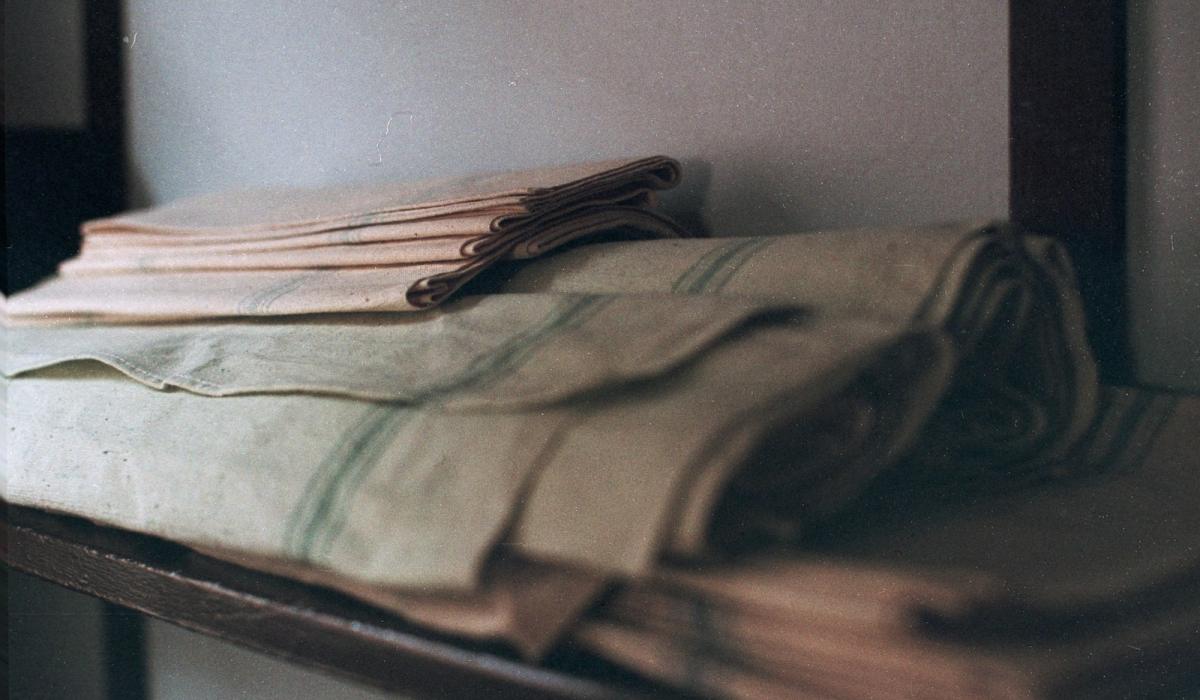
Almost every household in Pakistan has them: two or three good bedsheet sets kept at the back of the almirah for guests or for a special occasion. When they finally come out, there are faint yellow-brown lines exactly where the fabric was folded, and a smell of the cupboard that takes two washes to shift.
Neither is bad luck. Both have straightforward causes and straightforward fixes.
Why folded sheets go yellow
- Detergent left in the fabric. Residue oxidises slowly over months, and it concentrates along a fold where the fabric is pressed against itself. This is the main cause.
- Body oils that were never fully washed out. They yellow with time even on a sheet that looked clean when stored.
- Plastic bags and sealed boxes. They trap the small amount of moisture cotton always holds, and that moisture plus warmth is what creates both the colour and the smell.
- Sunlight through a glass almirah door on the same spot for months, which bleaches and weakens one area.
- Newspaper used as a liner. Newsprint ink transfers in a humid cupboard.
Before anything goes in the cupboard
- Wash with less detergent than you think, and run an extra rinse. Residue is the enemy here, not dirt.
- Make sure it is completely dry. Cotton can feel dry on the surface and still hold damp in the hem. Give it an extra hour.
- Never store starched or ironed-and-still-warm fabric. Starch feeds silverfish, and warm fabric sweats inside a stack.
- Store clean only. "I will wash it when I need it" is how a mark becomes permanent.
Folding so the folds do not show
You cannot avoid folding, but you can stop the same crease forming for two years in the same place.
- Refold every few months along different lines. Thirty seconds per sheet, and it prevents the permanent line entirely.
- Roll rather than fold for anything you rarely use. A rolled sheet has no sharp crease at all, and rolls stack neatly on their sides where you can see them.
- Keep the stack loose. Compression is what presses a crease in. A shelf packed tight to the roof is the worst case.
- Put plain white tissue or plain paper between folds for a bridal or special set — not newspaper.
The tidiest method, and the one that makes a cupboard usable: fold the sheet and the pillow covers together, then slip the whole set inside one of its own pillow covers. Every set becomes a single labelled parcel, nothing goes missing, and you never unfold three sets to find the one you wanted.
The cupboard itself
| Do | Avoid |
|---|---|
| Breathable cotton bags or pillowcases | Sealed plastic bags and vacuum bags |
| Plain cotton or paper shelf liner | Newspaper |
| Open the almirah for an hour on dry days | Keeping it shut all winter |
| Neem leaves, dried lavender or cloves | Naphthalene balls directly on fabric |
| Shelves away from the outer damp wall | The shelf next to the bathroom wall |
In humid cities a small box of silica gel or a few pieces of charcoal at the back of the shelf makes a real difference. In Punjab the bigger problem is winter damp in a cupboard that is never opened — air it occasionally on a clear day. During smog season, keep stored bedding bagged rather than open on the shelf; our smog season guide explains why.
If the lines are already there
- Soak the sheet in cold water with a little baking soda for an hour.
- Wash cold with mild detergent and an extra rinse.
- Dry it in direct sunlight while still damp. Sunlight is the most effective treatment for this particular yellowing, and it costs nothing.
- Repeat once if a shadow remains. Do not reach for bleach on a printed sheet — it will take the print with the stain, as our stain removal guide explains.
How many sets should a house own?
Storage problems are usually a symptom of owning too many sets and using too few.
- Two per bed is the working minimum: one on, one washed and ready.
- Three is comfortable in winter, when drying takes longer.
- One good set kept aside for guests is reasonable. Four is not — they will yellow before they are used.
- Rotate them. The set at the bottom of the stack should come to the top each month. Sheets that are used and washed stay fresh; sheets that sit do not.
If what you actually need is one more set in rotation rather than another one in storage, our crystal cotton king sets are Rs 2,399 with free delivery and cash on delivery across Pakistan. The buying guide covers how to judge a set, and the jahez checklist is worth reading before storing bedding for years, which is a harder problem than storing it for a season.
Frequently asked questions
Why do stored bedsheets turn yellow along the folds?
Usually detergent residue and body oils oxidising over months, concentrated where the fabric presses against itself. Storing in plastic makes it worse by trapping moisture.
Should I store bedsheets in plastic bags?
No. Plastic traps the moisture cotton naturally holds, which causes both the smell and the yellowing. Use a cotton bag or an old pillowcase instead.
How do I remove yellow fold lines from a bedsheet?
Soak in cold water with baking soda for an hour, wash cold with an extra rinse, then dry in direct sunlight while still damp. Avoid bleach on printed fabric.
What is the neatest way to store a bedsheet set?
Fold the sheet and pillow covers together, then slide the whole set inside one of its own pillow covers. Each set becomes one tidy parcel and nothing gets separated.
How many bedsheet sets does a household need?
Two per bed as a minimum, three in winter when drying is slower, plus one good set kept for guests. Rotate the stack so no set sits unused for a year.