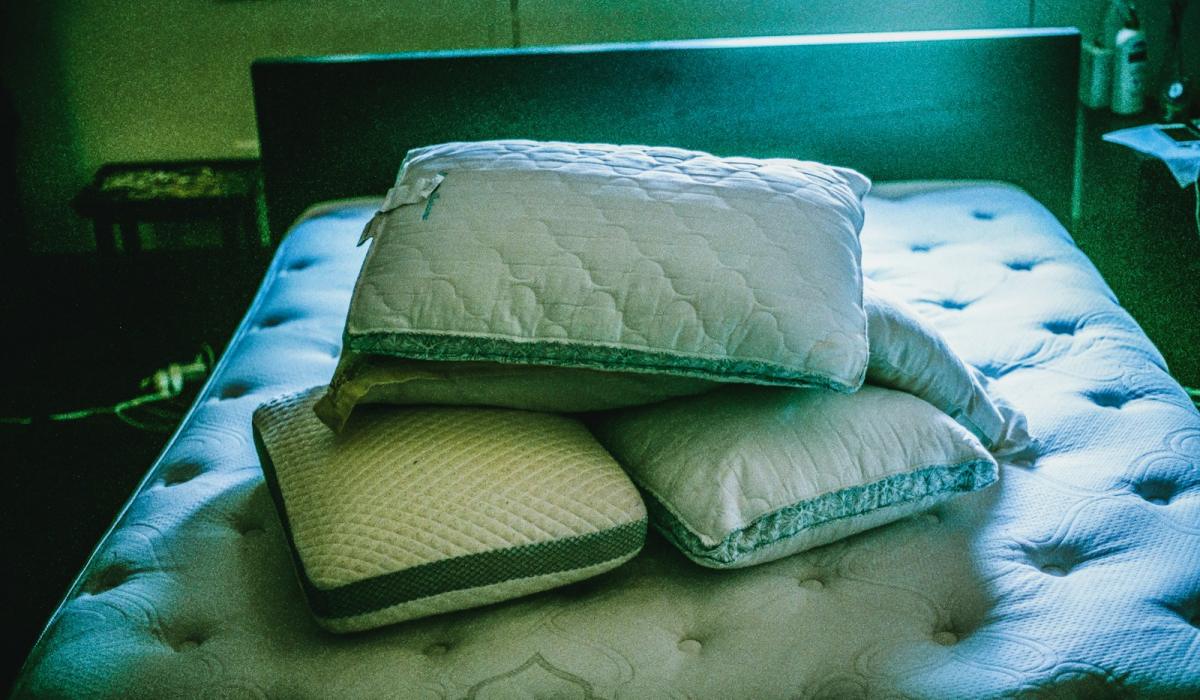
A pillow has one job: to fill the gap between your head and the mattress so your neck stays in line with your spine. Whether a pillow is "good" depends entirely on how big that gap is — which depends on how you sleep and how broad your shoulders are.
This is why a pillow a friend swears by can be useless for you, and why the expensive one is not automatically better.
Match the pillow to your sleeping position
| You sleep | Height (loft) | Firmness | Why |
|---|---|---|---|
| On your side | High — 5 inches or more | Medium-firm to firm | Must fill the gap from shoulder to head |
| On your back | Medium — 3 to 5 inches | Medium | Supports the neck curve without pushing the head forward |
| On your front | Very low, or none | Soft | Anything thick twists the neck all night |
| You move around | Medium | Medium | A compromise that works in both main positions |
Two adjustments. Broad shoulders need more height as a side sleeper, because the gap is bigger. And a soft mattress lets your shoulder sink in, which reduces the gap — so a soft mattress needs a lower pillow than a firm one.
The test that tells you if yours is wrong
Lie down as you normally sleep and have someone look at you from the front, or take a photo.
- Your nose should line up with the centre of your chest, and your head should be level — not tilted up towards the ceiling or dropped down towards the mattress.
- Head tilted up means the pillow is too high.
- Head dropped down means it is too low, or it has gone flat.
- Waking with a stiff neck or a dead arm under the pillow usually means too low.
- Waking with shoulder pain as a side sleeper often means too low as well — you are collapsing onto the shoulder.
Doubling a pillow over, or stacking two, is a sign the single pillow is wrong rather than a solution. A folded pillow does not hold its shape through the night.
When a pillow is finished
Pillows are replaced far less often than they should be. Two checks:
- Fold it in half. If it does not spring back open by itself, it is done.
- Look at it in daylight without the cover. Yellowing and permanent dents mean it has absorbed years of sweat and oil.
Most fibre-filled pillows in regular use last one to two years. Memory foam lasts longer, maybe three. A pillow that has flattened is not only uncomfortable — it is also where a lot of the dust mite load in a bed sits, which our dust allergy guide covers.
Filling, briefly
- Polyester fibre: cheap, light, washable. Flattens fastest. What most Pakistani households use.
- Siliconised fibre: the same idea with slippery coated fibres, so it springs back better and lasts longer. Worth the small extra cost.
- Memory foam: holds its shape and supports consistently. Sleeps warm, which matters more in Karachi than in Murree, and cannot be washed.
- Cotton or ruee: traditional, firm, breathable; flattens and needs re-carding, like a razai.
- Down and feather: rarely sold here, hard to clean in this climate.
Pakistani summers push this one way: breathability matters. A memory foam pillow in a room without AC in June will make you sweat around the head and neck all night.
The covers
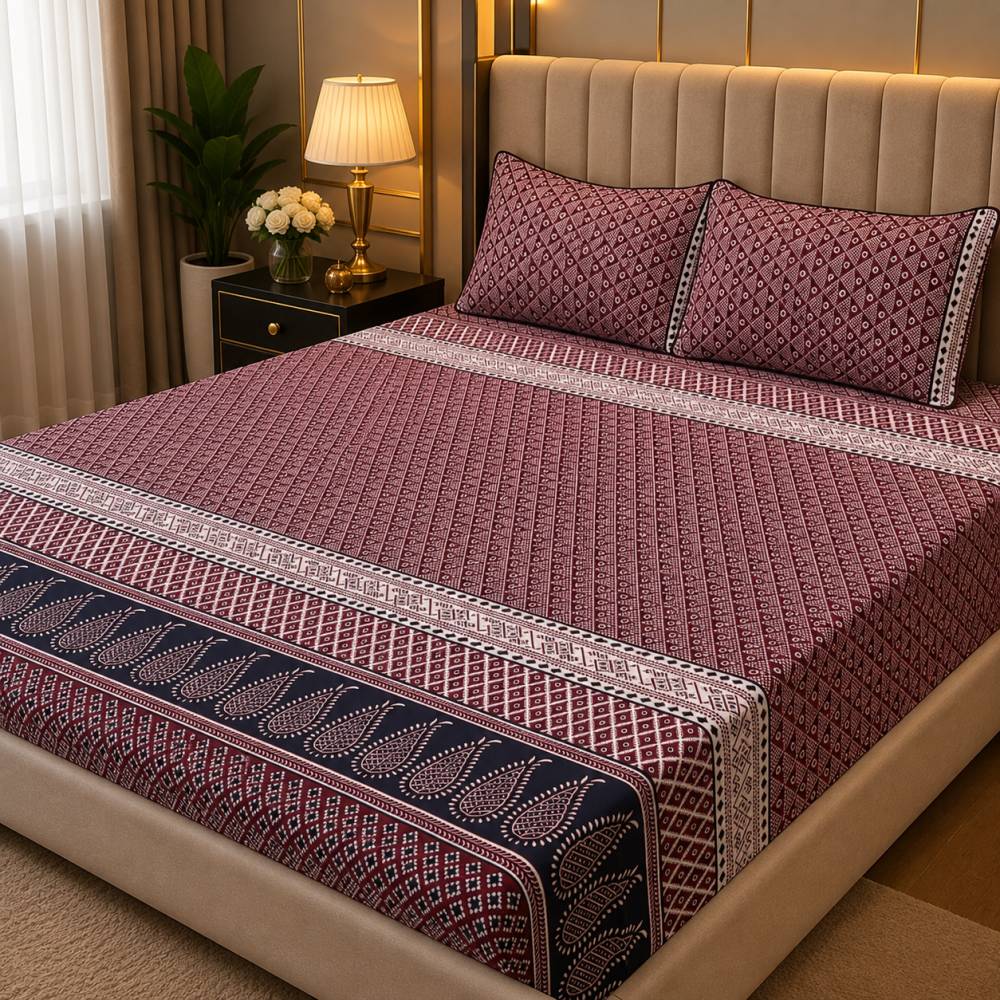
Two layers is the sensible arrangement. A plain inner cover stays on the pillow and takes the sweat and oil; the decorative pillow cover goes over it and gets changed with the sheets.
Change the outer cover every three to four days — it is the item that touches your face for eight hours and collects hair oil and whatever you put on your skin at night. Our changing schedule explains why this matters more than the sheet itself, and our guide to pillow cover fabrics covers cotton against satin for hair and skin.
Every 3 piece set in our bedsheet collection includes two pillow covers at Rs 2,399, so changing them weekly does not mean buying covers separately. Round gol pillows are a different thing entirely, used as bolsters rather than for sleeping — see the gol pillow guide and our cushion and pillow covers.
How many and how to buy
- Two per person. One to sleep on, one for sitting up, and a spare when one is being washed.
- Buy pillows and bedding separately. Pillow quality and sheet quality have nothing to do with each other.
- Press it in the shop and watch it recover. If it stays dented on the shelf, it will be flat in three months.
- Side sleepers should buy up in height. Most pillows sold are too low for side sleeping.
- Wash fibre pillows twice a year, two at a time to balance the machine, and dry them completely — as with a quilt, damp filling is what causes the smell. Our razai washing guide covers drying filled bedding.
And an honest limit: if neck or shoulder pain continues after you have fixed the pillow height, see a doctor rather than buying a third pillow. A pillow can cause a sore neck; it cannot treat one.
Frequently asked questions
Which pillow is best for side sleepers?
A high, medium-firm to firm pillow of about 5 inches or more, because it has to fill the gap between the shoulder and the head. Broad shoulders need more height still.
How do I know if my pillow is too high?
Lie down as you normally sleep and have someone look from the front. If your head is tilted up towards the ceiling, the pillow is too high; if it drops down, it is too low or flattened.
How often should pillows be replaced?
Every one to two years for fibre pillows, around three for memory foam. Fold it in half — if it does not spring back by itself, replace it.
Is memory foam good for a Pakistani summer?
It supports well but sleeps warm. In a room without AC, a breathable siliconised fibre pillow is usually more comfortable in hot months.
How often should pillow covers be changed?
Every three to four days. They collect facial oil and hair product, which is why they need changing more often than the bedsheet.