Walk through any bedding market in Lahore or Karachi and the same names come at you: crystal cotton, cotton satin, salonica, percale, khaddar, jacquard, microfibre. Few shops explain them, and some of the names describe the fibre while others describe the weave — which is why the labels feel so confusing.
There are really only two questions. What is it made of? And how is it woven? Everything else is marketing.
Part one: what it is made of
| Fibre | How it behaves | Honest verdict |
|---|---|---|
| Cotton | Breathes, absorbs sweat, softens with washing, creases | The right default for Pakistani weather |
| Cotton-polyester blend | Less creasing, dries fast, breathes less | Fine at a low budget; warmer in summer |
| Polyester / microfibre | Cheap, bright prints, traps heat, pills | Avoid for a bed you sleep in nightly |
| Khaddar | Thick handloom-style cotton, warm, softens over years | Winter in Islamabad, Murree, Quetta |
| Silk and satin (real) | Cool, slippery, expensive, delicate | Occasion use, not daily |
If a listing does not say what the fibre is, assume a blend with a good deal of polyester. Honest sellers state it.
Part two: how it is woven
The same cotton thread produces very different sheets depending on the weave.
- Plain weave — threads cross one over one. Matte, crisp, strong. Ordinary cotton bedsheets are this.
- Percale — a plain weave at a finer, denser thread count, usually around 200. Cool, crisp, slightly papery when new, and excellent in summer heat.
- Sateen / cotton satin — threads float across the surface instead of crossing at every point. Smoother, with a soft sheen, and it shows creases less. Still cotton, just woven differently.
- Jacquard — the pattern is woven into the cloth rather than printed on it. Heavier, more formal, more expensive.
- Twill — a diagonal rib, like denim. Hard-wearing, slightly heavier.
So what is "crystal cotton"?
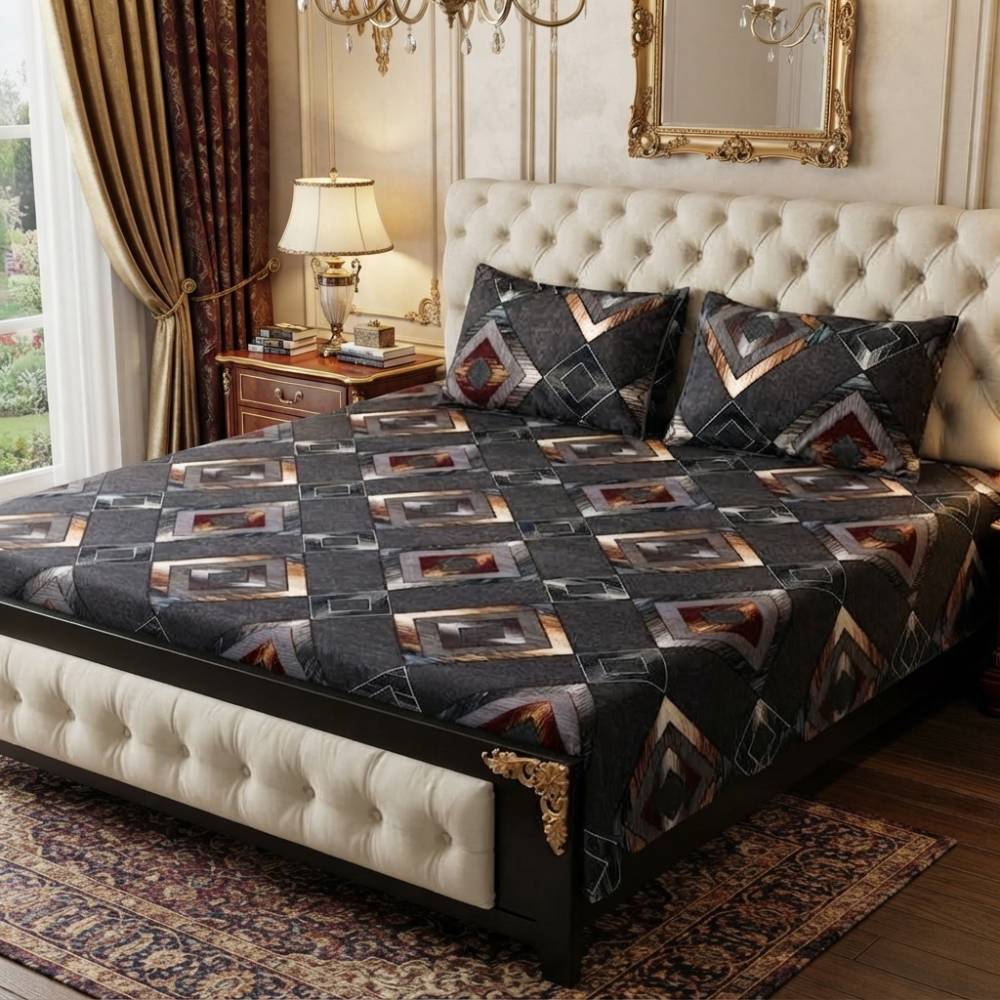
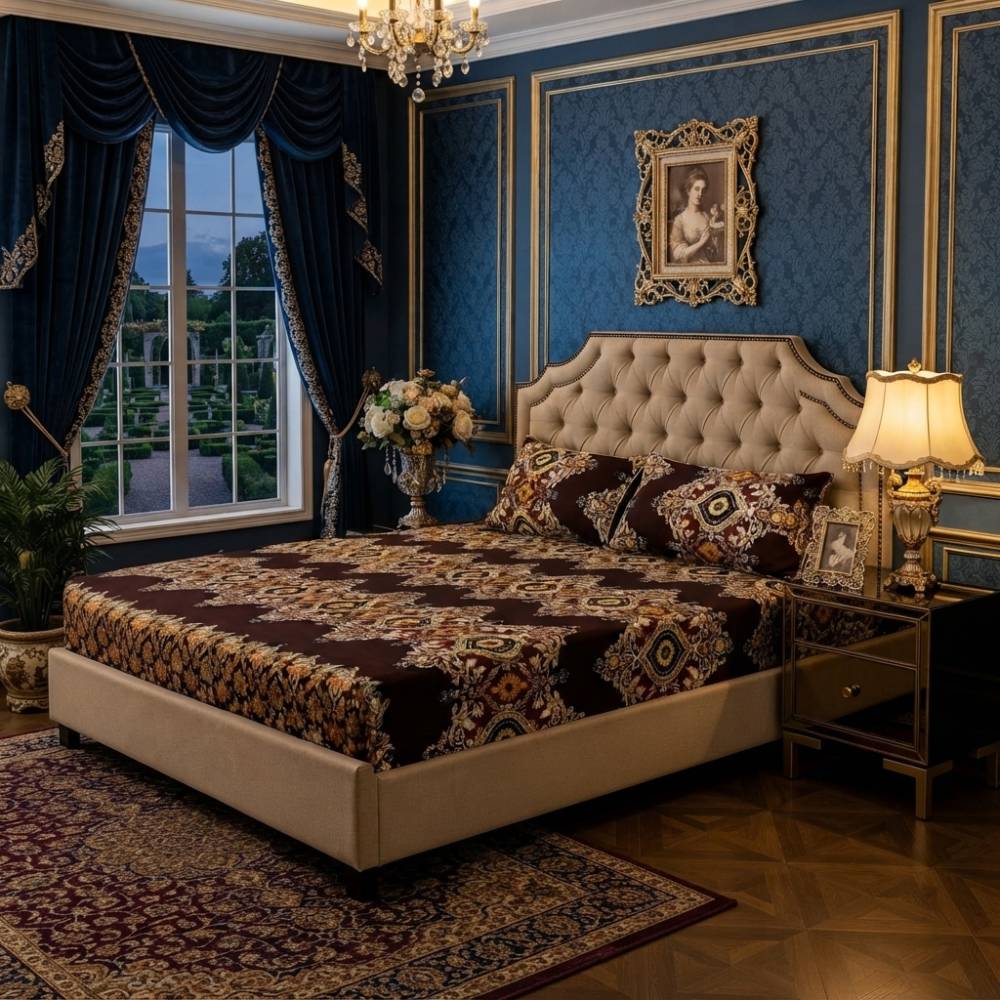
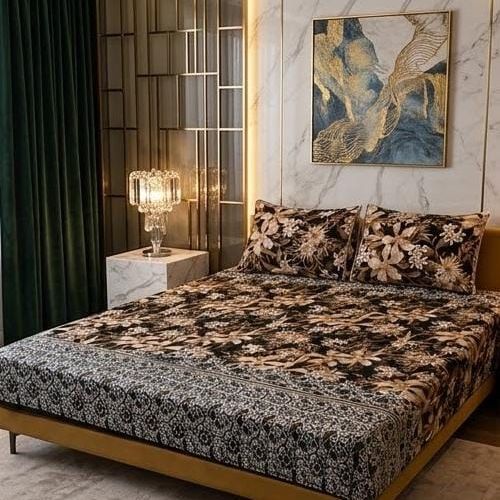
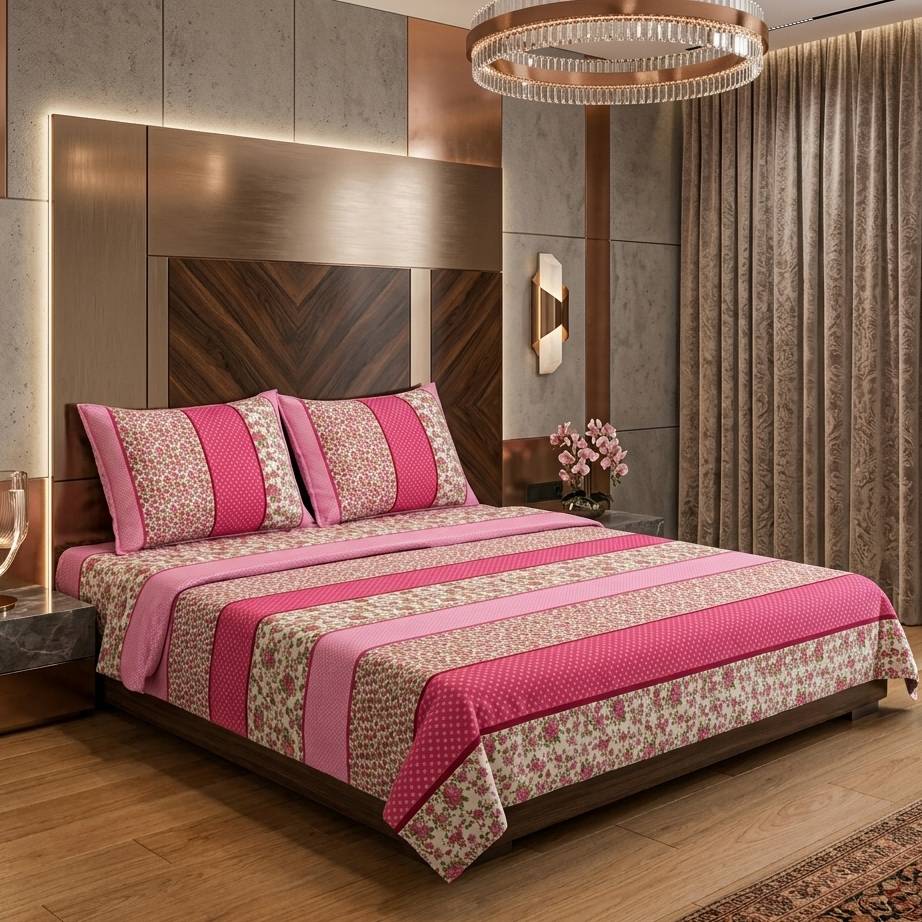
This is the name you will meet most often in Pakistan right now, and it is a trade name rather than a technical one. In practice crystal cotton means a smooth, fine cotton-rich fabric with a light sheen, printed in sharp, saturated colours. It sits between plain cotton and cotton satin: softer and shinier than plain cotton, less slippery and less delicate than satin.
Its real advantage is print quality. Large floral and damask designs hold their edges on crystal cotton in a way they do not on coarse plain weave, which is why nearly every printed set sold today uses it. Our crystal cotton guide goes into the detail, and the whole bedsheet collection is crystal cotton at Rs 2,399 a king set.
"Salonica" and similar names you will see on Daraz listings work the same way — shop names for a particular finish rather than a defined standard. Judge the cloth, not the label.
What about thread count?
Thread count is the number of threads per square inch. Higher sounds better, and up to a point it is: around 200 to 400 in genuine cotton is the useful range.
Above that the numbers are usually inflated by counting the individual strands twisted into each thread, so a "1000 thread count" sheet at Rs 1,500 is not what it claims. Thread count also tells you nothing at all about the fibre — a 300 thread count polyester sheet is still a polyester sheet. Fibre first, weave second, thread count last.
Matching fabric to the room
| Situation | Choose |
|---|---|
| Karachi summer, no AC | Percale or plain cotton — the most breathable |
| Lahore, all year, AC at night | Crystal cotton or cotton satin |
| Islamabad or Murree winter | Khaddar, or crystal cotton under a comforter |
| Guest room used occasionally | Crystal cotton — looks good, needs little care |
| Children's bed | Plain cotton, dark print, plus a waterproof protector |
| Bridal or formal room | Jacquard or satin for the night, cotton for after |
For winter specifically, our comparison of khaddar against crystal cotton covers which is actually warmer, and comforter, razai or duvet explains what goes on top.
Reading a listing honestly
- Fibre stated? "100% cotton", "cotton rich", "polyester blend". If it is missing, it is usually missing for a reason.
- Size in inches? Not just "king". See our size chart.
- Piece count? A 3 piece set is one bedsheet and two pillow covers.
- Price sane for the claim? Real heavy cotton jacquard does not sell for Rs 1,200.
- Photographs of the actual fabric? A close-up of the weave tells you more than a styled bedroom shot.
Our price guide sets out what each budget realistically buys, and the buying guide pulls the whole decision together.
How fabric changes the way you wash it
- Cotton and crystal cotton: cold wash, mild detergent, dry in shade for the first few washes.
- Cotton satin: the same, but avoid harsh brushing — the floating threads on the surface snag.
- Khaddar: expect shrinkage on the first wash, and expect it to get softer every year.
- Polyester blends: never hot — heat is what makes them pill.
The full method is in our washing guide. Everything we sell ships free across Pakistan with cash on delivery.
Frequently asked questions
What is crystal cotton bed sheet fabric?
A trade name for a smooth, fine cotton-rich cloth with a light sheen that holds printed designs sharply. It sits between plain cotton and cotton satin in feel.
Which bed sheet fabric is best for summer in Pakistan?
Percale or plain cotton, because a loose breathable weave lets heat and sweat escape. Avoid polyester and heavy satin in hot months.
Is cotton satin the same as satin?
No. Cotton satin is cotton woven in a satin weave, so it breathes. Satin or silk-look fabric is usually polyester and traps heat.
Does a higher thread count mean a better bed sheet?
Only up to about 400, and only in genuine cotton. Very high numbers are usually counted differently to inflate them, and the fibre matters far more.
What is khaddar bedding?
A thick, handloom-style cotton that is noticeably warmer than ordinary bedsheet cotton. It suits cold cities and gets softer with every wash.