Two things stop people hanging anything on their walls. Either the flat is rented and the landlord has opinions about holes, or the wall is solid block and plaster and a household drill simply skates across it.
Neither is a reason to live with bare walls. There are four ways to put something up without making a hole, and the only real skill is knowing which surfaces they hold on to.
First, read your wall
Adhesives fail on the surface, not on the weight. Before buying anything, press a strip of ordinary tape onto the wall and pull it off.
| Wall surface | Will adhesive hold? |
|---|---|
| Smooth painted plaster, emulsion | Yes — the best case |
| Gloss or enamel paint | Yes, but clean it with spirit first |
| Distemper or chalky whitewash | No. The paint comes away with the sticker |
| Bare or rough plaster | No — too much texture to grip |
| Wallpaper | Risky. It usually peels the paper |
| Tile, glass, polished wood | Yes, very well |
If the tape lifts paint, stop. On distemper, only leaning or a shelf will work — nothing adhesive will hold, whatever the packet claims.
1. Adhesive wall tiles
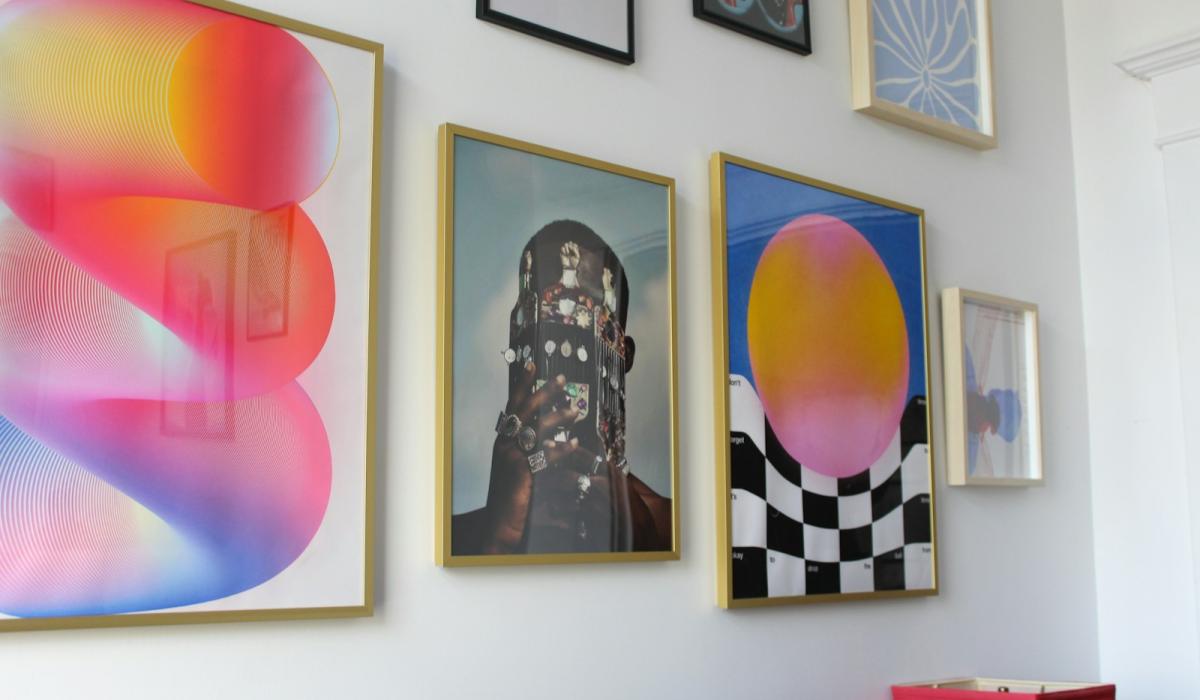
Pre-printed panels with adhesive already on the back. You press them onto the wall and you are finished — no tools, no hooks, no measuring hardware.
- Best for: a grid of several pieces, which is exactly the arrangement that is hardest to get straight with nails.
- Watch for: they need a clean, smooth, fully dry surface. Wipe the wall and let it dry for an hour first.
- Removal: peel slowly from a corner, pulling the tile back against itself rather than away from the wall.
Our set of 6 sticky wall art tiles is Rs 1,799 and goes up in a few minutes, and the motivational frames set works the same way for a study or home gym corner. The whole wall art collection is built around this, because most people we sell to are renting.
2. Adhesive hooks and strips
For anything that already has a frame, hooks and hanging strips carry more weight than people expect — several kilograms when used in pairs.
- Clean the spot with surgical spirit, not water, and let it dry completely.
- Press firmly for 30 seconds, then wait an hour before hanging anything on it. This step is skipped constantly and is the usual reason a hook falls at 3 a.m.
- Use two strips for anything wider than about a foot, so the frame cannot swing.
- Stay well under the stated weight limit. Pakistani summer heat softens adhesive, so treat the rating as optimistic in June.
3. Leaning
The easiest option and the one people forget. Lean a large frame against the wall on a console, a chest of drawers, a mantel or the floor.
- Overlap two or three pieces of different heights rather than lining them up.
- Anchor the group with something solid at one end — a lamp, a plant, or a decorative showpiece.
- Put a small piece of rubber or felt under the frame so it does not slide on marble or tile.
Leaning also lets you change the arrangement in seconds, which is why it suits a room you are still working out.
4. A shelf, a rail, or what you already have
One narrow shelf holds a changing display and needs at most two fixings — or none, if it sits on an existing ledge. Door frames, curtain rods and bookcases can all carry light pieces with clips or ribbon.
This is also the renter's answer for anything heavy. If a mirror or large framed piece genuinely needs support, it goes on a shelf or on the floor, not on a sticker.
Arranging it so it looks deliberate
The method matters more than the method of attachment.
- Lay it out on the floor first. Move pieces around until the shape works, then photograph it so you can copy it on the wall.
- Hang at eye level. The centre of the arrangement sits around 57 to 60 inches from the floor. Most Pakistani homes hang art far too high.
- Keep gaps even and small — two to three inches between pieces reads as one composition; six inches reads as scattered.
- Relate it to the furniture. Art above a sofa or bed should span roughly two-thirds of the furniture's width.
- Mark positions with masking tape before committing, since an adhesive tile does not forgive a second attempt.
Our wall art ideas guide has more on choosing pieces for a room, and bedroom lighting covers how to light what you have put up — a warm lamp beside a wall of frames does more for a room than another frame would.
Getting it off again without damage
- Peel slowly, at a shallow angle, back against the tile — never straight out from the wall.
- Warm the adhesive first with a hairdryer on low for 20 to 30 seconds. It softens the glue and makes a clean release far more likely.
- Remove any residue with a little cooking oil on a cloth, then wipe with soapy water.
- If paint does lift, a small touch-up with leftover emulsion is still less work than filling drill holes.
A quick comparison
| Method | Weight it takes | Best for |
|---|---|---|
| Adhesive tiles | Light, self-contained | Grids and gallery arrangements |
| Adhesive hooks and strips | Light to medium framed pieces | Art you already own |
| Leaning | Any weight | Large pieces, mirrors, renters |
| Shelf or ledge | Any weight | Displays you change often |
Everything in our décor collection ships free across Pakistan with cash on delivery, usually in 3 to 5 working days.
Frequently asked questions
How can I hang pictures without drilling into the wall?
Use adhesive wall tiles, adhesive hooks or hanging strips on a smooth painted surface, or lean larger pieces on a shelf, console or the floor.
Will sticky wall art damage the paint?
On smooth emulsion or gloss paint it usually peels away cleanly, especially if you warm it with a hairdryer first. On distemper or chalky whitewash it will lift the paint, so use leaning or a shelf instead.
How much weight can adhesive hooks hold?
Several kilograms when used in pairs and pressed on properly, but stay well below the stated limit. Heat softens adhesive, so allow extra margin in summer.
At what height should wall art be hung?
Put the centre of the piece or the arrangement about 57 to 60 inches from the floor, and make art above a sofa or bed roughly two-thirds of the furniture's width.
How do I remove adhesive residue from a wall?
Rub it gently with a little cooking oil on a cloth to break down the glue, then wipe the spot with soapy water and let it dry.